
Groundwater Monitoring Analyses at Caltest Labs
Key Takeaways
- Groundwater monitoring helps identify contaminants and supports environmental compliance, remediation, and site management programs.
- Caltest performs groundwater analyses using EPA-approved analytical methods for a wide range of organic compounds, pesticides, metals, and other contaminants.
- Advanced instrumentation, including collision cell ICP-MS technology, improves the accuracy of trace metals analyses by reducing analytical interferences.
- Caltest has decades of experience supporting regulatory groundwater monitoring projects with high-quality analytical data.
- The laboratory continually adopts proven analytical advancements to improve data quality and provide reliable results for clients.
- Custom analytical methods and contaminant lists are available to meet project-specific groundwater monitoring requirements.
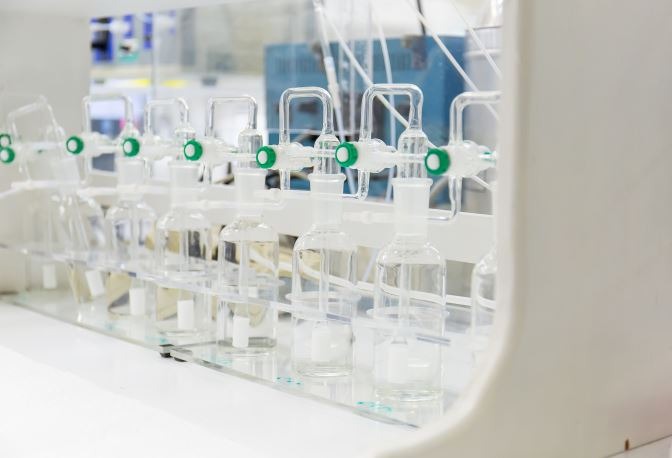
Groundwater Monitoring Analysis Services
Caltest is a leader in the use of EPA-required analytical methods. Our performance evaluation studies have been excellent over more than thirty-five years. We are recipients of four awards from the California Water Environment Association for our services, and have participated in numerous monitoring studies scrutinized by government and industry experts. Our lab primarily runs water samples for lower levels of contaminants, which helps in keeping the system optimized for low levels of reporting without cross-contamination or carry-over from one sample to another.
EPA-Approved Analytical Methods for Groundwater Monitoring
Organic Compound Analysis
-
Organochlorine Pesticides and PCB’s (EPA 8081)
-
Organophosphorus Pesticides (EPA 8141)
-
Volatile Organics (EPA 8260)
-
Semi-Volatile Organics (EPA 8270)
-
Polynuclear Aromatic Hydrocarbons (EPA 8270)
-
Carbamate Pesticides (EPA 8321)
Advanced Mass Spectrometry for Groundwater Analysis
Our pesticide analytical work is conducted using mass spectrometers. We have ended the debate over whether detections by conventional detectors are really the target analyte or interferences. Mass Spectrometer data is fundamentally stronger to identify the pollutant in the groundwater. We have conventional analyte lists and custom lists using the mass spectrometers.
Collision Cell ICP-MS Technology for Trace Metals Analysis
Collision Cell is an ICPMS metals instrumentation advancement for reducing matrix based interferences in trace metals analyses. Almost all matrix interference in ICPMS results in overestimation of the analyte concentration which is problematic for regulatory compliance use.
Caltest was the first lab to explore the collision cell improvements in this region, and did extensive demonstrations of its capabilities at our own expense to prove this technique before recommending it to our clients. We served as the introduction of the technique to the local EPA Region 9 QA staff, and obtained the first letters of authorization to use this process for compliance work. This advancement was not demanded by clients, but researched by us, demonstrated here in real matrices, communicated in our in-house seminars and training events, and finally made routine for all our ICPMS work that is not for drinking water, where it is not approved yet. This has been a nice success story demonstrating our interest in offering the best techniques available, and acting as an early adopter of instrument or process advances that will improve the data quality of client samples.
We were the first and still one of the few to provide all ICPMS metals by collision cell. Use of collision cell dramatically reduces the positive quantitation bias associated with interferences. Groundwater monitoring analyses by collision cell will handle matrix interferences better than conventional ICPMS alone. Challenge matrices can be spiked to explore if the collision cell addresses your particular matrix issues.
Partner with Caltest for Groundwater Monitoring Projects
Caltest is open Monday-Friday 8 am – 5 pm to receive samples. If shipping samples, please ship them on ice, overnight with an early morning delivery, and note : “ATTN: Sample Receiving” on any coolers shipped. We also have couriers available to pick up samples; you can request a pickup online or call the lab to check for availability. A courier fee may apply. We recommend that you coordinate with the lab in advance to ensure meeting holding time requirements.
To discuss your groundwater monitoring needs, contact your Caltest project manager or email the client services team at info@caltestlabs.com.
FAQs
What is groundwater monitoring?
Groundwater monitoring involves collecting and analyzing groundwater samples to detect contaminants, assess environmental conditions, and meet regulatory or remediation requirements.
What contaminants can be tested in groundwater?
Groundwater can be analyzed for a wide range of contaminants, including volatile organic compounds (VOCs), semi-volatile organic compounds (SVOCs), pesticides, PCBs, petroleum-related compounds, trace metals, and other site-specific pollutants.
Why are EPA-approved analytical methods important?
EPA-approved methods provide standardized procedures that help ensure analytical results are accurate, consistent, and acceptable for environmental compliance and regulatory reporting.
What is collision cell ICP-MS?
Collision cell ICP-MS is an advanced analytical technique used during metals testing to reduce matrix interferences that can affect measurement accuracy. This technology improves confidence in trace metals results for many groundwater monitoring applications.
Who typically requires groundwater monitoring?
Groundwater monitoring is commonly required for environmental consulting firms, industrial facilities, landfills, remediation projects, government agencies, and organizations conducting environmental compliance monitoring.
Why choose Caltest for groundwater analysis?
Caltest combines decades of environmental laboratory experience with EPA-approved methods, advanced instrumentation, and a commitment to adopting proven analytical technologies that improve data quality and support reliable environmental decision-making.